
Herbal Wisdom: Parsley
Updated: Jul 18
Parsley is one of those herbs that's easy to overlook.
Too often she's remembered as the little green sprig tucked beside a restaurant meal, pretty enough to admire, but easily pushed aside. Yet for generations, parsley has quietly earned her place as one of the hardest-working herbs in the kitchen.
A member of the carrot family, parsley brings freshness, balance, and just enough brightness to wake up everything from soups and sauces to roasted vegetables and hearty casseroles.
Sometimes the smallest handful makes the biggest difference.
A Long History
Parsley has been cultivated for more than 2,000 years.
Native to the Mediterranean region, it was treasured by the ancient Greeks and Romans before becoming a staple of cottage gardens throughout Europe. Over time, parsley found its way into kitchens around the world, valued not only for its fresh flavor but also for its traditional medicinal uses.
Today, it's difficult to imagine a well-stocked herb garden without a patch of parsley growing nearby.
Traditional Uses
Traditionally, parsley has been used to:
Support healthy digestion
Freshen the breath
Encourage healthy kidney and urinary function
Provide antioxidant support
Offer gentle diuretic properties
Supply vitamins and minerals through everyday meals
Parsley is naturally rich in Vitamins A, C, and K, along with folate, iron, and numerous beneficial plant compounds.
Its greatest strength may simply be encouraging us to eat more fresh herbs every day.
Growing Parsley
Parsley is easy to grow and thrives in both gardens and containers.
It prefers:
USDA Zones 4–9
Full sun to partial shade
Rich, moist, well-drained soil
Consistent watering
Parsley is a biennial, producing leafy growth the first year before flowering and setting seed during its second season.
Harvesting
Begin harvesting once the plant is well established.
Always cut the outer stems first, allowing the younger center growth to continue producing.
Parsley may be:
Used fresh
Frozen
Dried
Blended into herb butters or pesto
Although drying is convenient, freezing often preserves more of parsley's fresh flavor and vibrant color.
Curly vs. Flat-Leaf Parsley
Not all parsley is the same.
Curly Parsley
The parsley many of us grew up seeing as garnish.
Its tightly curled leaves have a mild, fresh flavor that makes it perfect for:
Mashed potatoes
Deviled eggs
Soups
Holiday platters
Garnishes
Flat-Leaf (Italian) Parsley
With broader leaves and a stronger, more robust flavor, Italian parsley shines in cooking.
It's often the preferred choice for:
Pasta sauces
Meatballs
Chimichurri
Gremolata
Tabbouleh
Soups and stews
Think of it this way:
Curly Parsley
Pretty
Mild
Finishing touch
Flat-Leaf Parsley
Bold
Earthy
Built for cooking
Both have earned their place at the hearth.
From Granny B's Kitchen
Parsley is one of those herbs that almost always finds its way into our meals.
It brightens heavy dishes, freshens soups, and adds just enough color to remind us that simple ingredients often make the greatest difference.
One of our family favorites is this Homemade Freezer Garlic Bread. Keeping a loaf tucked away in the freezer means cheesy garlic bread is never very far away. This is a wonderful way to add more parsley to your meals. I hope you enjoy it.
Homemade Freezer Garlic Bread
8 tablespoons salted butter, room temperature
2 tablespoons olive oil
4 cloves garlic, minced
1/4 teaspoon garlic powder
1/4 teaspoon salt
1 tablespoon dried parsley
1 loaf French bread
Add the butter, olive oil, minced garlic, garlic powder, salt, and parsley to a bowl. Mix the ingredients together until they form a fairly smooth mixture.
Slice the French bread into 1 inch thick slices. Add 1/2 to 1 tablespoon of the garlic spread to each slice of bread, spread it from edge to edge.
Arrange the slices on a baking sheet and then place them in the freezer for about 30 minutes to allow the butter to firm up. Once firm, transfer the garlic bread to a gallon sized freezer bag for longer storage. Store in the freezer up to three months.
To cook the frozen slices of garlic bread, preheat the oven to 400F. Once the oven is heated, take as many pieces out of the freezer as you'd like, place them on a baking sheet.
Bake for 10-15 minutes, or until the edges are golden brown. If you prefer a softer garlic bread without crispy edges, wrap the slices in foil before baking.
We will often add slice or shredded cheese on top, allowing it to melt and brown if we can wait that long.

Herbal Lore
Throughout history, parsley has been associated with renewal, remembrance, hospitality, and protection.
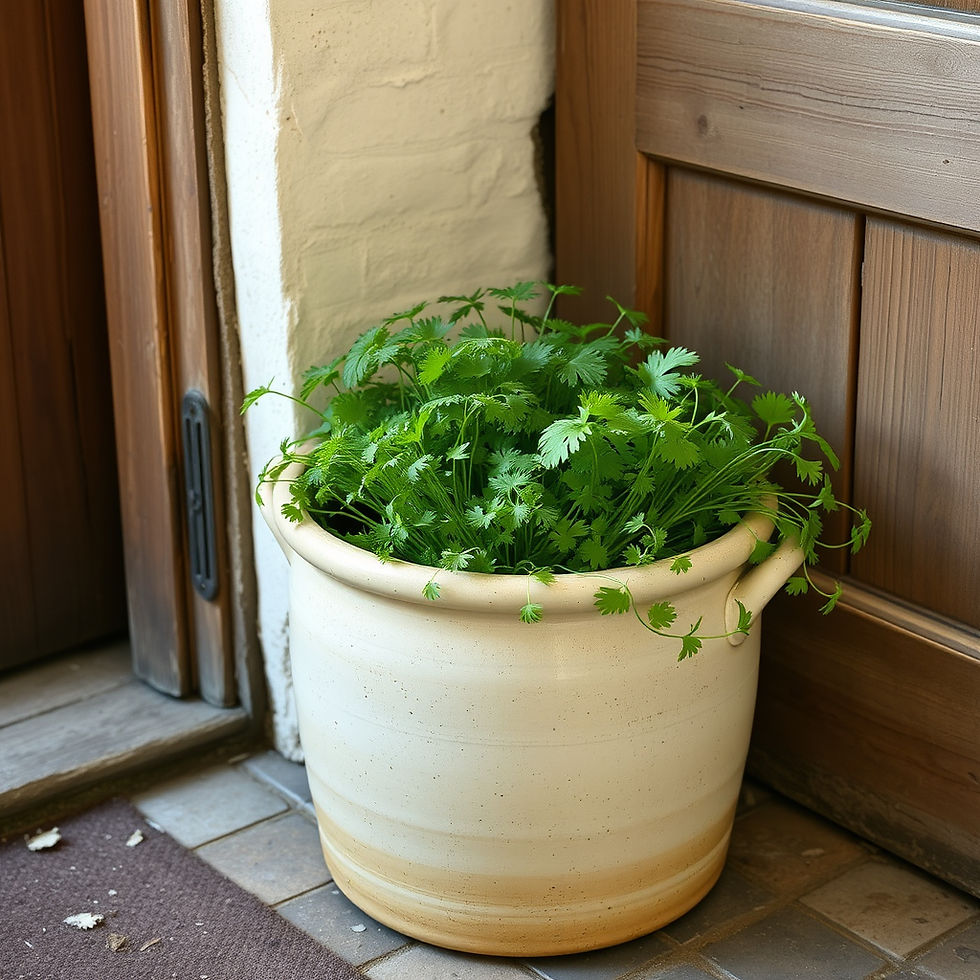
Many cottage gardeners planted parsley near the kitchen door so it would always be close at hand, while others believed it welcomed friends and good fortune into the home.
Whether grown for practical use or cherished for its symbolism, a healthy pot of parsley has long represented a home where good food and warm hospitality are never in short supply.
A Word of Caution
Parsley is considered very safe when enjoyed as a culinary herb.
However, concentrated medicinal preparations or large amounts of parsley tea may not be appropriate during pregnancy because parsley has traditionally been associated with stimulating the uterus.
Anyone with kidney disease or taking blood-thinning medications should consult their healthcare provider before using parsley medicinally.
These statements have not been evaluated by the Food and Drug Administration. This information is intended for educational purposes only and is not intended to diagnose, treat, cure, or prevent any disease.
Hearthkeeper's Tip
Keep a pot of parsley growing just outside the kitchen door—or in a sunny windowsill.
Fresh parsley added at the very end of cooking preserves both its bright color and fresh flavor, bringing even the simplest meals to life.
At a Glance
Botanical Name: Petroselinum crispum
Common Names: Curly Parsley, Italian (Flat-Leaf) Parsley
Family: Carrot (Apiaceae)
Parts Used: Leaves, stems, roots (some varieties)
Flavor: Fresh, grassy, slightly peppery
Traditional Uses: Digestive support, freshening breath, gentle diuretic, antioxidant-rich
Companion Herbs: Basil, Oregano, Thyme, Chives, Garlic
Growing Zones: USDA 4–9
Pollinator Friendly: Yes! If allowed to flower in its second year, parsley attracts bees and beneficial insects, and serves as a host plant for Black Swallowtail butterfly caterpillars.
From my hearth to yours,
Parsley reminds us that not every gift arrives with great fanfare. Sometimes the quietest herbs are the ones that brighten everything they touch."
~Granny B


Comments