
Herbal Wisdom~Cinnamon
Updated: Jul 18
There are few spices that make a house feel like home quite the way cinnamon does.
Before the first bite of pie is served or the cookies leave the oven, cinnamon has already filled the kitchen with warmth. It has a way of wrapping itself around a room, inviting everyone to wander in and ask, "What are you baking?"
For centuries, cinnamon was considered so valuable it was traded alongside gold and other precious goods. Once you've watched it bloom in warm butter or swirl through fresh bread dough, it's easy to understand why.
Sometimes comfort begins with nothing more than the scent of cinnamon on the air.
A Long History
Cinnamon comes from the inner bark of evergreen trees belonging to the Cinnamomum family.
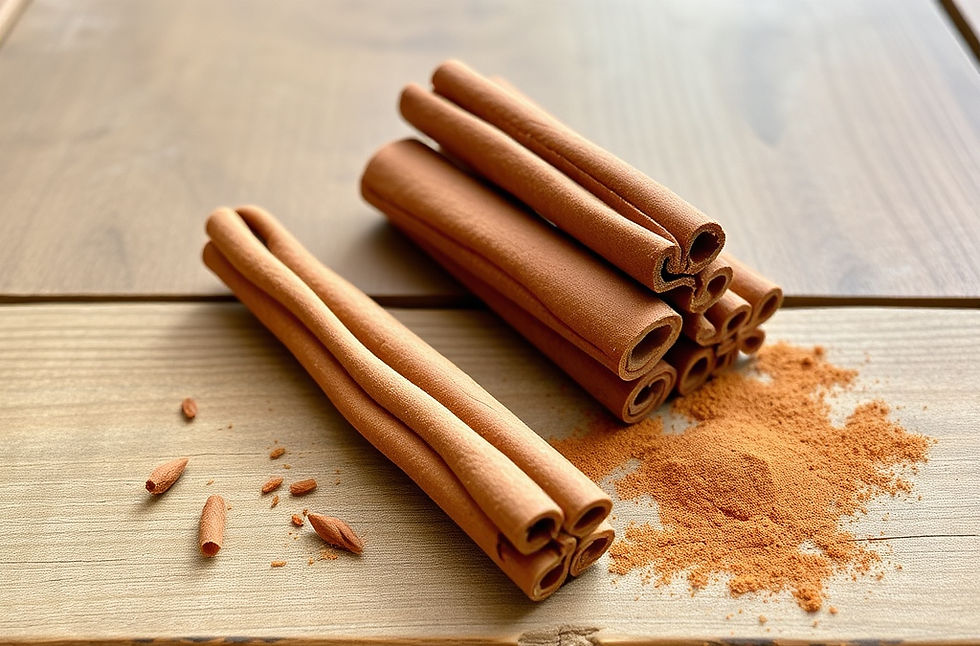
After harvesting, the bark naturally curls into the familiar quills found in spice shops around the world.
Although often spoken of as a single spice, there are several varieties, each with its own personality.
Ceylon Cinnamon (Cinnamomum verum)
Often called "true cinnamon," Ceylon is lighter in color with a delicate, sweet flavor and lower levels of coumarin.
Cassia Cinnamon (Cinnamomum cassia)
The cinnamon most commonly found in grocery stores, cassia has a darker color and a stronger, richer flavor.
Vietnamese (Saigon) Cinnamon (Cinnamomum loureiroi)
Grandpa B's favorite.
Vietnamese cinnamon is bold, deeply aromatic, naturally sweeter, and contains higher levels of cinnamaldehyde—the compound responsible for cinnamon's unmistakable warmth and fragrance.
It's the variety we always reach for when making Snickerdoodles, because if you're going to roll a cookie in cinnamon sugar......you might as well mean it.
Traditional Uses
Throughout history, cinnamon has traditionally been used to:
Support healthy digestion
Ease occasional bloating and gas
Encourage healthy circulation
Warm the body during cooler seasons
Provide antioxidant support
Support healthy blood sugar levels already within normal ranges
Its warming nature has made cinnamon a favorite in traditional herbal systems around the world, particularly during autumn and winter when hearty meals and comforting drinks become part of daily life.
Growing Cinnamon
Unlike many herbs featured in this series, cinnamon is harvested from tropical evergreen trees rather than garden plants.
It thrives in:
USDA Zones 10–12
Warm, humid climates
Rich, well-drained soil
Full to partial sun
Because it requires tropical conditions, most of us enjoy cinnamon from our spice cabinet rather than our backyard.
Harvesting
Cinnamon is harvested by carefully removing the inner bark from young branches.
As the bark dries, it naturally curls into the beautiful cinnamon sticks familiar to every baker.
Ground cinnamon loses its flavor more quickly than whole quills, so storing whole sticks whenever possible helps preserve both aroma and flavor.
From Granny B's Kitchen
Cinnamon has a permanent place in our pantry.
It finds its way into oatmeal, apple butter, breads, cookies, spice cakes, simmer pots, and countless holiday recipes.
But if you ask Grandpa B...There is only one recipe that truly deserves Vietnamese cinnamon.
His Snickerdoodles.
The rich warmth of Saigon cinnamon gives these cookies the perfect balance of sweetness and spice, making them one of the first treats to disappear from the cookie jar.
Grandpa B's Favorite Snickerdoodle
1/2 cup shortening
1/2 cup butter
1 1/2 cups sugar
2 egg
2 3/4 cups flour
1 teaspoon cream of tartar
1 teaspoon baking soda
1/4 teaspoon salt
2 tablespoons sugar
2 teaspoons cinnamon
Heat oven to 400°F.
Cream shortening, butter and sugar, beat in eggs, set aside.
Mix flour, cream of tartar, baking soda and salt. Add to sugar mixture.
Form into balls the size of walnuts. Roll in sugar and cinnamon mixture.
Place 2 inches apart on ungreased baking sheets. Bake 8-10 minutes until golden brown.

Herbal Lore
Across many cultures, cinnamon has long been associated with warmth, prosperity, protection, success, and abundance.
It has traditionally been added to incense, home blessings, sachets, and festive foods intended to welcome both friends and good fortune.
Perhaps that's why cinnamon continues to feel so comforting today.
Whether stirred into cider, baked into cookies, or sprinkled over warm buttered toast, it reminds us that some of life's richest blessings are meant to be shared.
A Word of Caution
Cinnamon is considered very safe when enjoyed as a culinary spice.
However, cassia and Vietnamese cinnamon naturally contain higher amounts of coumarin, which may affect the liver when consumed regularly in concentrated quantities.
If you have liver disease, are pregnant, or take medications affecting blood sugar or blood clotting, consult your healthcare provider before using cinnamon supplements or medicinal preparations.
These statements have not been evaluated by the Food and Drug Administration. This information is intended for educational purposes only and is not intended to diagnose, treat, cure, or prevent any disease.
Hearthkeeper's Tip
Store cinnamon sticks and ground cinnamon in airtight containers away from heat and sunlight.
Fresh cinnamon should smell warm and sweet the moment you open the jar. If you have to search for the aroma, it's probably time to replace it.
At a Glance
Botanical Name: Cinnamomum verum, Cinnamomum cassia, Cinnamomum loureiroi
Common Names: Ceylon Cinnamon, Cassia Cinnamon, Vietnamese (Saigon) Cinnamon
Family: Laurel (Lauraceae)
Parts Used: Inner bark
Flavor: Warm, sweet, woody, gently spicy
Traditional Uses: Digestive support, warming spice, circulation support, antioxidant-rich
Companion Herbs & Spices: Ginger, Clove, Nutmeg, Cardamom, Allspice, Vanilla
Growing Zones: 10–12
Pollinator Friendly: Yes! Cinnamon trees produce small fragrant flowers that attract pollinators in tropical climates.
From my hearth to yours~
"Cinnamon reminds us that warmth is one of the greatest gifts we can offer. Whether shared through a fresh loaf of bread, a cup of tea, or a plate of cookies still warm from the oven, kindness has a way of spreading just like the fragrance of cinnamon."
~Granny B


Comments